Academic Department Highlight: Social Sciences
By Luca Parlatore ‘28, Staff Writer; Edited by Kat Willson ‘26, Head Editor-in-Chief
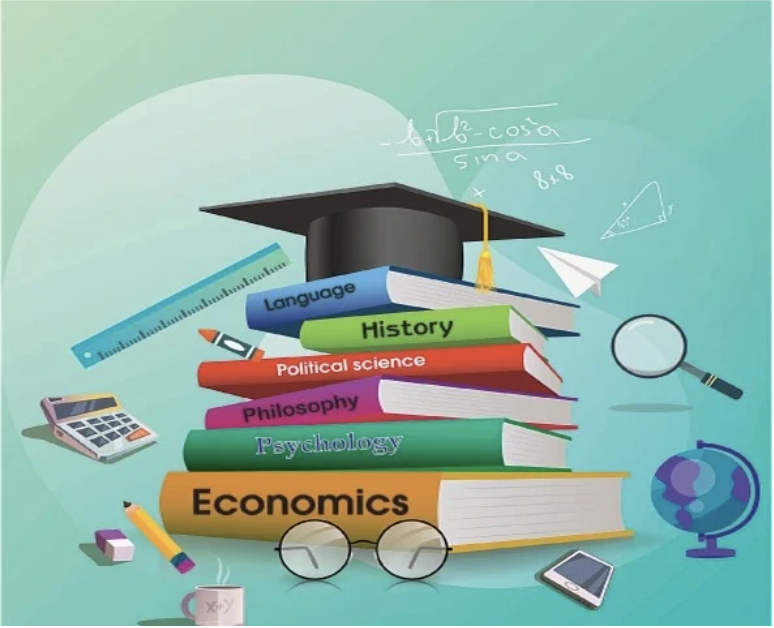
“Ridley’s Social Sciences Department engages students in authentic, experiential, and inquiry-driven learning that deepens cultural understanding, fosters global citizenship, and empowers young people to act as informed, compassionate contributors to society.” This quote from Mr. Martin, Head of the Social Sciences Department, captures the power and authenticity behind the department’s mission. It shows how courses are built to go beyond traditional learning, and instead, teach students to understand a wide range of viewpoints, ask meaningful questions, and examine real-world issues, creating well-rounded individuals. Through education in Geography, History, Civics, Careers, and Business, the Social Sciences department at Ridley equips students with the knowledge, skills, and mindset needed to become informed, engaged, and thoughtful citizens of the world.
Geography and History are two courses that every Ridley student takes in Grade 9 and Grade 10, respectively. In these classes, students explore physical, environmental, social, and cultural patterns over time, helping them to build an understanding of cause-and-effect relationships in society. These classes are arguably the most relevant to the current global political landscape. As Ms. Miele, a History and Geography teacher, explains, “Many current global issues did not appear suddenly - they are a result of decisions, conflicts, and power structures built over time. Studying past events often exposes the root of today's problems, helps students recognize patterns of inequality, conflict, and resistance.” Combining geographical and historical perspectives in the early years of Upper School enables students to think critically about current events and form thoughtful, well-informed opinions, contributing to the department’s goal of creating reflective, educated members of society.
Civics and Career Studies are two of the most practical courses at Ridley. Every student takes these classes in Grade 10, and they build skills such as investigation, critical questioning, financial literacy, and future planning. These programs are very personal to students as they give them a chance to explore their personal goals, values, and beliefs, empowering them to make informed and intentional choices. Just as importantly, these courses develop critical thinking skills, which are crucial for excelling in future endeavours such as university or the workplace. In doing so, the Civics and Careers courses serve as another excellent example of how our Social Sciences Department prepares students to leave Ridley as contributing members of society.
The last section of the Social Sciences Department is the Business and Economics section. Students can choose to take these courses at any grade level, ranging from Introduction to Business in grades 9 and 10, to Economics and Business Management in grades 11 and 12. These courses help students understand financial systems, markets, and monetary decisions. By taking these classes, students will learn how certain economic choices impact individuals, businesses, communities, and nations, while also developing skills such as budgeting, marketing, and strategic thinking. Alongside the rest of the department, these classes encourage students to evaluate evidence, assess risk, and consider long-term consequences, which are all skills essential in both personal and professional life.
Across all sections of the department, essential skills are taught that extend far beyond the classroom. Students are encouraged to think critically, question assumptions, interpret evidence, and ask thoughtful questions. Learning how to apply these skills gives students a lifelong advantage – one that can only be earned at Ridley. Through its diverse courses and shared visions, the Social Sciences Department prepares all Ridley students to graduate as informed, compassionate, and capable members of society.