All Quiet on the Western Front Book Review
By Skylar Gao ‘30, Contributor; Edited by Safiya Ahmed ‘27, Editor-in-Chief
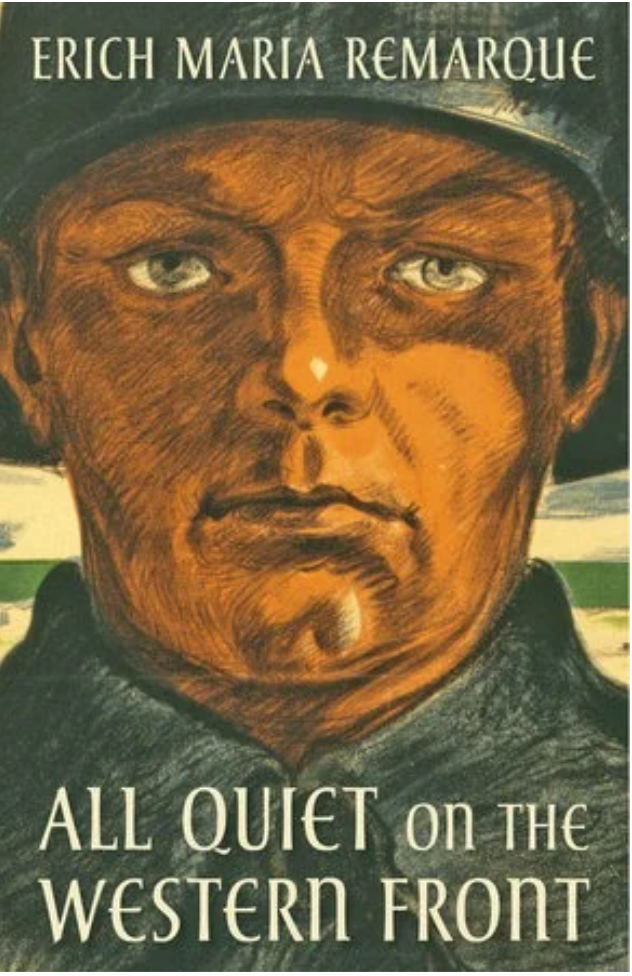
Erich Maria Remarque’s 1929 novel, All Quiet on the Western Front, reads like a haunting memoir while documenting the physical and mental toll of World War I on German soldiers. The book goes into the realities of trench warfare, the loss of innocence, and the extreme stress faced by those on the front lines. Through a gritty and realistic writing approach, Remarque holds the interest of the reader in this fictional but deeply truthful account. In general, All Quiet on the Western Front gives an unsettling look into the senselessness of war and the "lost generation" it created.
The book starts with Paul Bäumer and his young classmates who were encouraged by their teacher to enlist in the army. Not knowing how brutal the war would be, the boys’ excitement quickly turns to horror as they experience the reality of the battlefield. This first part, with its descriptions of basic training and the first sights of combat, shows the harsh shift from civilian life to the struggle for survival, setting a somber mood for the book. After the start, Remarque moves into the daily lives of the soldiers, putting Paul among a group of weary men who find more brotherhood with each other than with their own families. He shares how the war works, causing constant hunger, fear, and the sight of friends dying, often ending in a feeling of emptiness.
A main part tells of the soldiers' time in the trenches, where the constant shelling and gas attacks create a living nightmare.
The closeness of the enemy lines and the randomness of death brought worries that no one would make it home. The place where they fought was a "hot zone" of a different kind, filled with mud, rats, and the constant threat of artillery. Paul and his friends acted out of instinct, wearing gas masks and ducking for cover to survive the barrages. Even when Paul goes home on leave, he finds he can no longer connect with people who haven't seen the war, which shows that the damage is not just physical but deep in the mind.
Throughout the book, Remarque profiles the soldiers like Katczinsky, the group leader who teaches the younger boys how to find food and stay alive. Remarque says that these men put their lives at risk every day, not for glory, but because they have no other choice. A main idea in All Quiet on the Western Front is how fragile human life is, showing how a single piece of shrapnel can wipe out a person's entire future. People often think of war as a heroic event, but the book shows war’s power to destroy the spirit of those who fight it.
Another idea is the disconnect between the people in power and the soldiers in the mud. Remarque says that the leaders and teachers who pushed for war did not have to face the consequences. This gap between those who start wars and those who fight them raises the theme of betrayal. The book also looks at the shared humanity between enemies, seeing a moment where Paul kills a French soldier and realizes they are actually very much alike. Remarque gives respect to the common soldier by showing their suffering and the loss of their youth.
Erich Maria Remarque has a style of writing that is stark and direct. This can be seen in how he shares the details of injuries and the silence of the graveyard. His book can be intense, but the pain feels real. Because of this style, the book feels more like a confession than a history lesson. Remarque makes the story more personal to help readers understand the tragedy of the war. The honesty may be hard or too much for some readers, but it remains a powerful reminder of the cost of conflict.