
But I’m a Cheerleader: Review of a Quintessential 90s Rom-Com
By Mia van Beuningen ‘26, Staff Writer; Edited by Isoken Uwaifo ‘29, Staff Editor
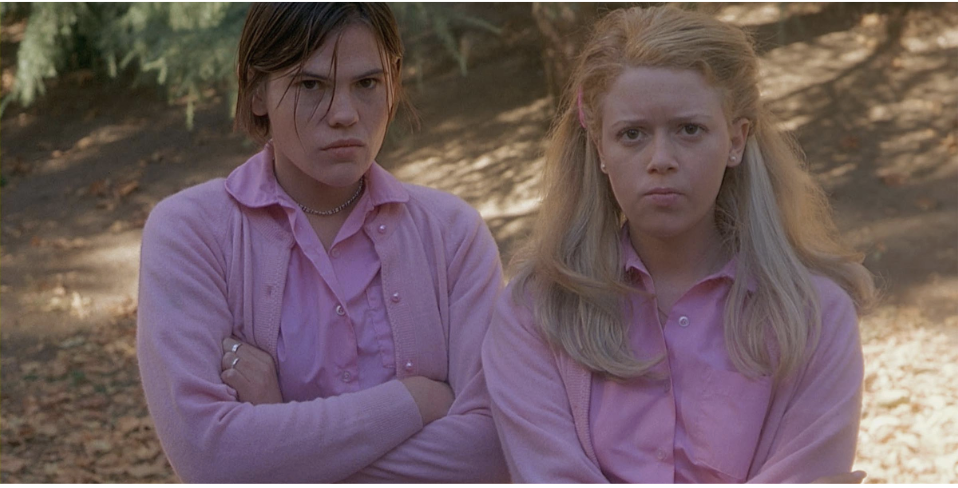
Are you looking for a rom-com that’s quirky and funny, and that follows the story of just two lovable characters? Look no further than But I’m a Cheerleader (1999). Julia Roberts wasn’t the only redhead Rom-Com star of the ‘90s- there was also Natasha Lyonne. Lyonne stars as Megan. She considers herself to be nothing more than a typical American teenage girl, - she excels in school, cheerleading, and has the life most teen girls dream of. She is dating the best-looking guy in school! But Megan doesn’t like to hang out with him- instead, she’d rather hang out with girls and ends up falling in love with a new love interest. Despite her perfect life, her conservative parents worry that she must be a lesbian based on her recent behavior. They then make a decision to send her to True Directions, a conversion therapy boot camp- where she and other queer kids learn the “ways of the straights.” I know, this does not sound like your classic meet-cute, but trust me, this movie does not fail to grasp at your heartstrings.
While Megan is at conversion therapy camp, she meets a group of other closeted teens, and this is where the adventure begins. Among this group, there is a diverse spread of people, but there is only one that really catches her eye- Graham. With her cool, edgy, alternative look, who can blame her? Meghan and Graham get off to somewhat of a rocky start, both hesitating to like one another. Forced proximity and grand gestures lead them to bond and quickly fall in love. But I’m A Cheerleader also features none other than the fantastic RuPaul. He stars as a counsellor at the conversion-therapy camp, who just might be struggling with the same “issues” as the campers. But I’m a Cheerleader cleverly satirizes homophobia in society by ridiculing the narrow-minded logic and homophobic phrases that were commonly used in the 90s. This movie balances the seriousness of the topic of homophobia with an overflow of witty and clever jokes. This movie is the perfect mix of comedy and a surprising, sincere exploration of what it meant to be queer back then through the lens of teenage lesbian love. Although it is not your usual girl-meets-boy rom-com, it absolutely earns its place as a romantic '90s classic.