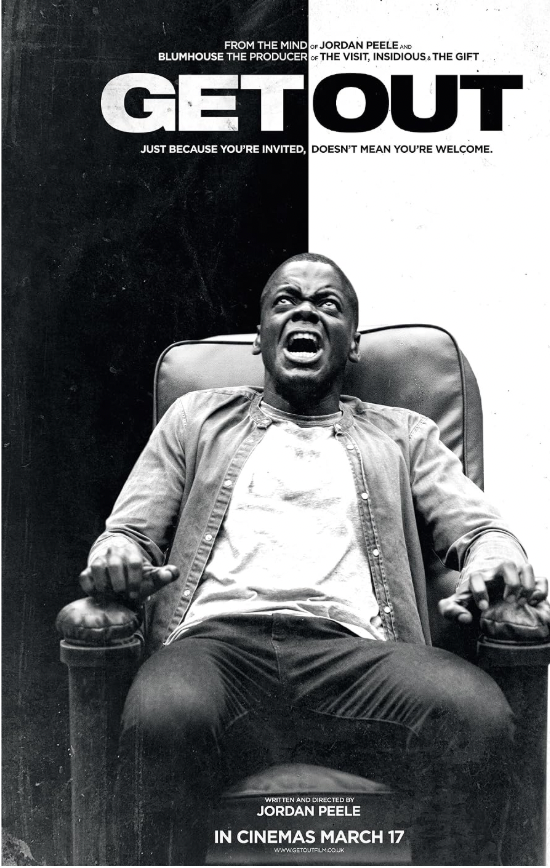
Get Out (2017) by Jordan Peele
By Isoken Uwaifo ‘29, Staff Writer; Edited by Safiya Ahmed ’27, Head Editor-in-Chief
Can horror movies do more than just scare the audience? Can it psychologically play with the audience’s feelings and alter their perception? Jordan Peele’s psychological and emotional horror film Get Out (2017) explores these questions by adding hidden clues throughout the movie, suspense, and symbolism to create a story that is both disturbing and leaves the audience thinking.
The film begins with a man named Chris Washington, a young Black photographer who visits the family home of his white girlfriend Rose Armitage. It is initially supposed to be a normal weekend for him, meeting his girlfriend’s family and spending a couple days– but things start to become strange after the first night he spends there. As Chris uncovers strange details about Rose’s family, Peele transforms a very uncomfortable social situation into a psychological horror story that shocks viewers and raises questions about prejudice and power. I think that one of the most interesting elements of the film is the use of suspense. Peele didn’t just rely on conventional horror techniques, rather he created tension through awkward character interactions and unusual odd behaviour. These end up influencing (the main character) Chris’ dramatic escape at the end. The film uses things like visual symbolism, making the audience pay attention to small details and pointing out clues that lead to the film's shocking plot twist.
The title, Get Out, creates a sense of urgency and danger that is suggesting something is seriously wrong before the audience knows what is truly happening.
There is also thematic significance, within the story, the main character Chris is warned when another character snaps out of his spell and yells at him to get out before he is taken away by the white characters, but later comes back apologizing for his outburst.
However, there is a deeper meaning to the story. It explores how prejudice can hide behind politeness, admiration, and positive attitudes. Throughout the film, we see Chris encounter people who seem to appear welcoming, but their behaviour shows an unsettling difference in how they present themselves, versus how they actually think of him.
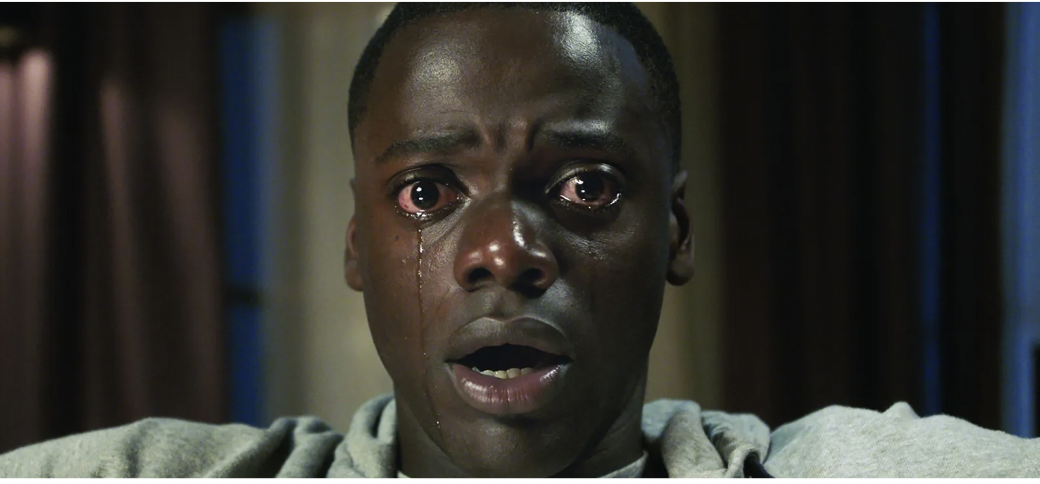
Peele uses these interactions to show the idea that racism can appear through underlying discriminatory attitudes that exist beneath benign words or actions. Another aspect of the film that I like is the amount of symbolism, like the Sunken Place, where Chris is trapped by Rose’s mother whenever she wants to control him. Whenever he enters this state, he can see what is happening in front of him but is unable to speak, leaving him powerless and trapped. According to the words of Jordan Peele, “No matter how hard we scream, the system silences us”. He created the Sunken Place to comment on the lack of Black representation in film as well as the generally early demise of black characters in the genre. Moreover, he describes the Sunken Place as the feeling you get when you’re about to fall asleep but then you jump because it feels like you’re about to fall thus waking you up. But what if you never woke up? Through connections like this to the wider themes of the film, Peele communicates the deeper significance of the film and makes the audience want to think critically about what they are watching. I think that this is one of the film’s most creative choices because it transforms an abstract social issue into something the audience can visualise. Overall, Get Out is so much more than just another horror movie. It has many psychological elements and plot twists that shock the viewers. Peele created a film that not only entertains viewers, but also challenges them to question their own perceptions of racism, power, and human behaviour. The Sunken Place, one of the most talked about aspects of the movie, shows how people can be aware of what is happening around them but feel powerless, showing the marginalization of Black people in society. Get Out shows how horror can be used to expose uncomfortable realities that we face in our society. It leaves the audience questioning: What if the most disturbing part about the movie are the issues that actually exist?