Remembrance Day
By Capt. Giovannini, Contributor; Edited by Safiya Ahmed ’27, Head Editor-in-Chief
Remembrance Day marks the anniversary of the Armistice that brought the fighting of the First World War to an end on November 11, 1918. Since then, November 11 has become the day to honour the Canadians who gave their lives in service to our country, recognize our veterans, and remember those who continue to serve in the Canadian Armed Forces.
More than 66,000 Canadians and Newfoundlanders lost their lives during the First World War, while approximately 42,000 Canadians died during the Second World War (1939–1945). Their sacrifices, along with those who served in conflicts and peacekeeping missions since, remain an important part of our history.
At the 11th hour of the 11th day of the 11th month, Canadians pause for two minutes of silence to remember and commemorate those who served and sacrificed in times of war, conflict and peace.
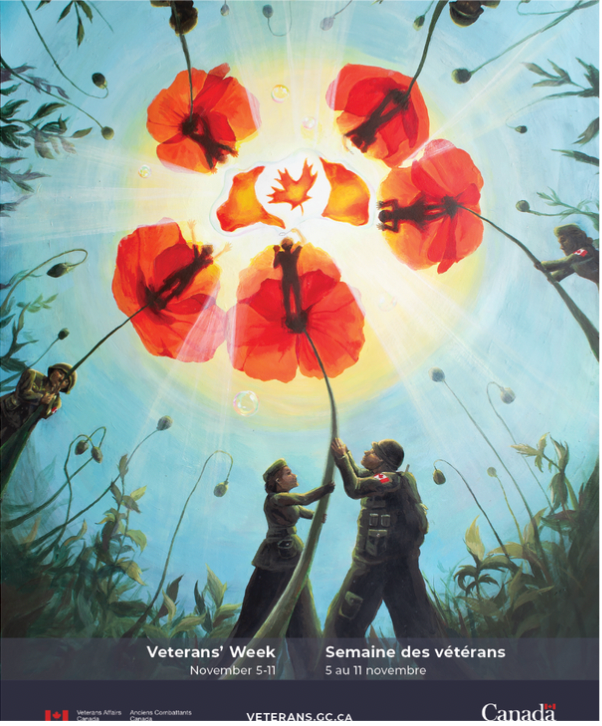
The red poppy has a particularly strong connection to Canada through In Flanders Fields, the poem written by Canadian physician and soldier Lieutenant-Colonel John McCrae in May 1915. Serving in Belgium during the First World War, McCrae was inspired by the poppies growing among the graves of fallen soldiers. His poem helped establish the poppy as a symbol of remembrance throughout the British Empire and beyond.
In 1921, the Great War Veterans Association, a predecessor of the Royal Canadian Legion, adopted the poppy as Canada's official Flower of Remembrance.
Today, the Royal Canadian Legion distributes poppies each year, beginning on October 24 and continuing until November 11, with donations supporting Canadian veterans and their families.
For Canadians, the poppy remains a powerful symbol of remembrance, connecting McCrae's words to the sacrifices of those who served and the responsibility of future generations to remember them.
Remembrance Day is an opportunity to ensure that the sacrifices of those who came before us are not forgotten. We remember their service, their courage and their lives, and we pass their stories on to future generations.
Lest we forget.