The Story of Nine Lessons and Carols
By Melissa Weng ‘27, Staff Writer; Edited by Kat Willson ‘26, Head Editor-in-Chief
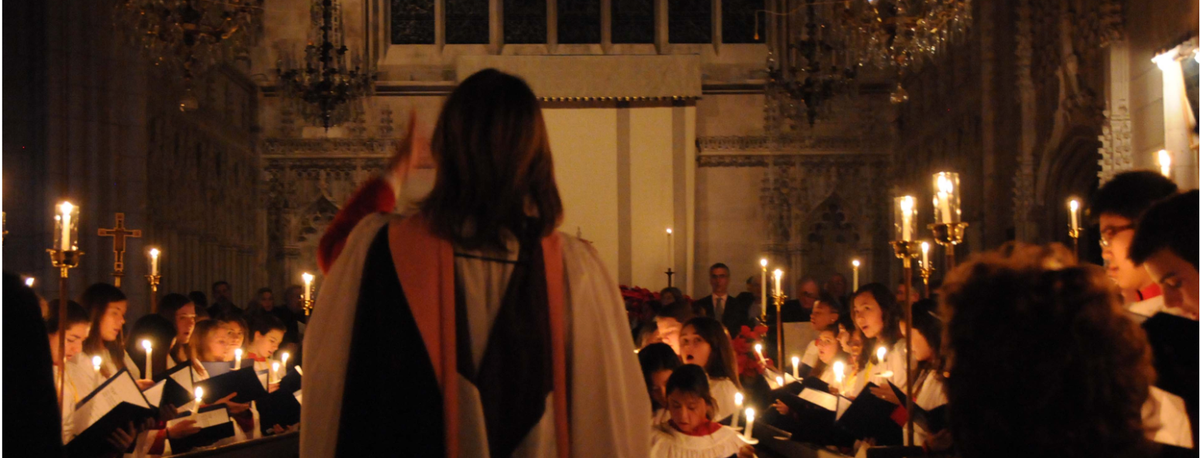
The hazy darkness of the Memorial Chapel was illuminated by the soft glow of candlelight as the Upper School Choir processed through the pews. The melodious sound of Once In Royal David’s City flowed down the aisle, breaking through the silence and marking the beginning of the historical Nine Lessons and Carols service.
The earliest version of the Nine Lessons and Carols is thought to have taken place in the late 19th century and was conducted by Bishop Edward White Benson of the Truro Cathedral in Cornwall, England. It originated as an idea to encourage the Cornish people to participate in religious celebrations during the holiday season rather than excessively drinking in pubs, which was considered the norm during festivities. At the time, carols were mostly labelled as secular and therefore not included in Christian services, but as several publications of carol compilations, such as the carols for use in church during Christmas and Epiphany, gained popularity, more and more churches began to integrate them into the Christmastide services. The Truro Cathedral was one of them, announcing a Christmas Eve service of carols in place of their usual door-to-door carolling in 1878. This eventually led to the first formal version of the Nine Lessons and Carols service, held at 10:00 pm on Christmas Eve, 1880, with over 400 people in attendance.
Although the format of the Nine Lessons and Carols originated from the Truro Cathedral, its globalization is largely credited to the then dean of King’s College, Cambridge, the Reverend Eric Milner-White, who brought the service to the college. He was concerned about public attitudes towards religion after the First World War, and in 1918, he decided to introduce the carol service to attract people back to worship. The Nine Lessons and Carols proved to be a huge hit with the masses, and it became an annual tradition. In 1919, Milner-White altered the order of the lessons, added a bidding prayer penned by himself, and opened the service with Once In Royal David’s City, which has become one of the most indispensable parts of the service.
The traction for the service only grew from there. In 1928, the British Broadcasting Corporation (BBC) began broadcasting via radio, and in 1954, through television as well. The Nine Lessons and Carols spread across the globe, with millions of people tuning in or watching the annual live broadcast of the service at King’s College, becoming a keystone tradition of Christmas time.
Though Ridley’s Nine Lessons and Carols services differ from Benson’s version, or even Milner-White’s version, the essence and the purpose remain. To experience the core narrative of Christmas through story and song, and to bring community together with warmth in times of cold.